The International Valuation Standards 2028 Exposure Draft makes an important advance by recognising informal, communal, collective and tribal land interests more explicitly than many earlier standards have done. But when viewed through the realities of customary land, it still raises a deeper concern: what happens when a global technical valuation framework tries to make sense of customary land without first understanding what customary land is?
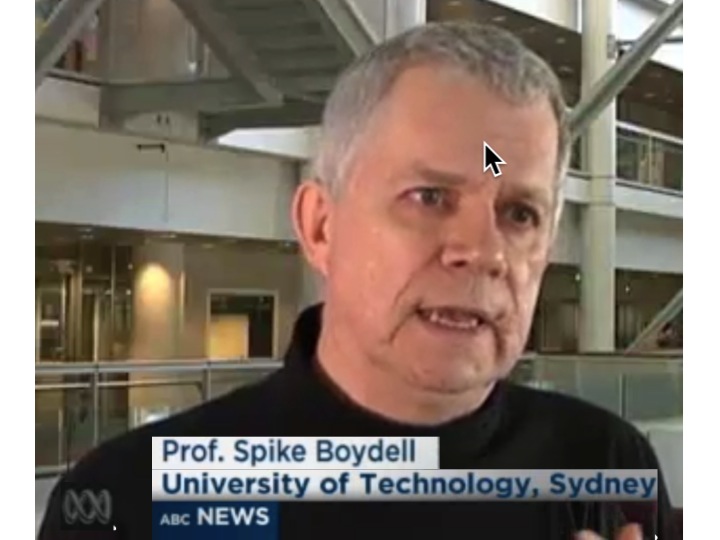
In this episode of The Customary Land Podcast, Spike Boydell reflects on why that matters, why customary land cannot simply be treated as an awkward variation within an inherited valuation system, and why legitimacy, stewardship, authority and intergenerational responsibility must be held before valuation is allowed to arrive.
The episode explores the deeper structural problem of valuation-first thinking in customary, tribal and Indigenous land contexts. It also explains why concepts such as market value, highest and best use, and valuation-date closure may be too narrow when dealing with living relational systems shaped by layered rights, obligation, continuity and customary authority.
Or simply search for The Customary Land Podcast in your preferred podcast player.
If you would like a copy of our full submission to the International Valuation Standards Council, or more information about SUITU and the SUITU Governance Integrity Platform, please email:
contact@customarylandsolutions.com
 rophet at home, today we took our review of the iTaukei Land Trust Board (iTLTB) to the world stage, presenting to a packed conference venue at the World Bank Land and Poverty Conference 2014 in Washington DC.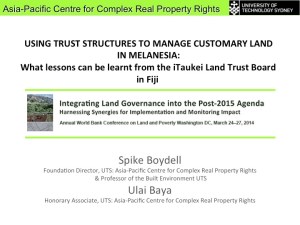
 B, it is time to stop being lethargic (according to PM Bainimarama) and take leadership of land in Fiji. And to all of you aspiring to run for the elections in Fiji this year… you can’t afford to overlook the land issue. You can read our roadmap for making the iTLTB fit for purpose in the 21st Century
  Customary Land Solutions